About All Tours Sunrise ToursFrom Calgary ToursAnd Lake Louise ToursSunset ToursFrom Banff ToursFrom Canmore Tours Directions Hours & Fees
Find Tours 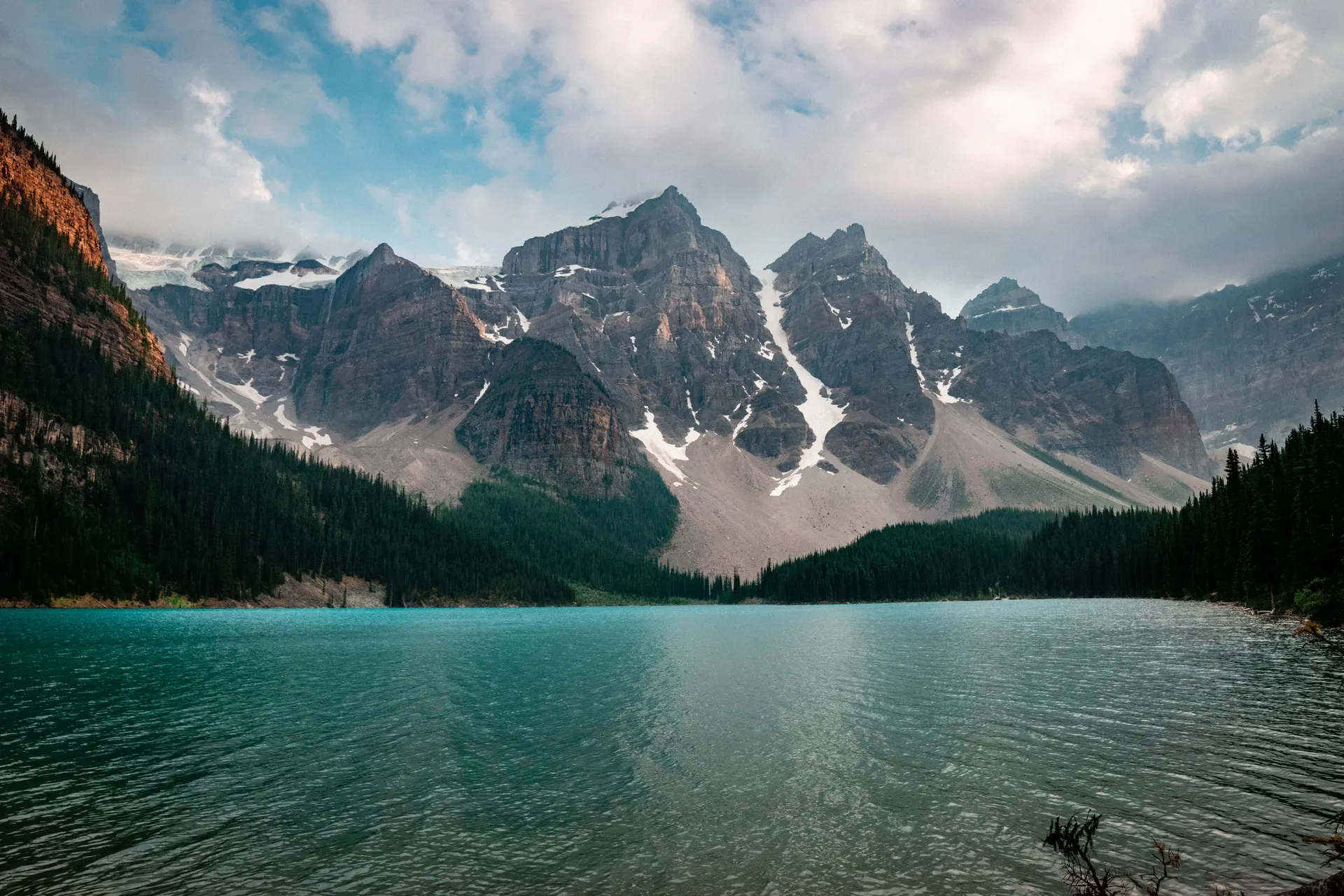
Moraine Lake occupies 50 hectares of the Valley of the Ten Peaks in Banff National Park. Glacial rock flour turns the 14-meter-deep water a distinct turquoise color, drawing visitors to its 1,884-meter elevation.
Glacial meltwater fills the 50-hectare basin of Moraine Lake, sitting at an elevation of 1,884 meters in Banff National Park. The water maintains a temperature of 3-4°C year-round. Rock flour from the Fay Glacier and Larch Creek refracts sunlight, giving the lake a sharp turquoise hue. Ten jagged peaks of sedimentary limestone, shale, and dolomite rise directly from the shoreline. Visitors reach the site by traveling 14 kilometers outside the village of Lake Louise.
Access requires planning and strict adherence to park rules. Personal vehicles cannot drive Moraine Lake Road. You must book a Parks Canada shuttle, ride the Roam Route 8X transit bus, or hire a commercial operator. Shuttles run from June 1 to October 12, 2026. Missing the April 15 reservation window means you have to try booking exactly two days before your trip at 8:00 AM MDT. Winter closes the road entirely due to severe avalanche risks.
Once on site, the environment demands respect. Bear spray belongs on a chest harness, not inside a backpack. The air at this altitude thins out, causing headaches for hikers rushing up the rocky stairs to the viewing points. Walking the 2.7-kilometer Lakeshore Trail offers a flat path through the forest. Renting a red canoe costs $160 CAD per hour, but private watercraft are banned to prevent the spread of Whirling Disease.
The physical layout of the area forces crowds into a few concentrated zones. The Rockpile Trail absorbs the heaviest foot traffic, as hundreds of people climb the uneven stone steps every hour to photograph the Valley of the Ten Peaks. The Moraine Lake Lodge occupies the western edge of the water, providing the only commercial services in the valley. The lodge operates a small cafe, but it does not open until 8:00 AM. Visitors arriving on the 4:00 AM Alpine Start shuttle face freezing temperatures in complete darkness. You need a heavy jacket, gloves, and a thermos of hot coffee to endure the three-hour wait for sunrise.
Cellular service drops out five kilometers before the parking lot. You cannot download maps, check the weather, or call a taxi from the lake. All digital preparations must happen before leaving Lake Louise. The isolation preserves the wild character of the valley, but it punishes unprepared hikers. If you twist an ankle in Larch Valley, rescue teams rely on satellite communication and physical runners to coordinate a response.
The Stoney Nakoda First Nations utilized the Moraine Lake valley for millennia before European contact. They hunted, gathered, and treated the area as a sacred place of healing. The dense alpine forests and steep mountain passes provided shelter and resources for nomadic bands moving through the Canadian Rockies. Tom Wilson cut the first formal trail through the thick timber in 1899. That same year, Walter Wilcox arrived with Samuel Allen's expedition to map the region. Wilcox stood on a large pile of rocks, assumed it was a glacial moraine, and officially named the body of water Moraine Lake. Geologists later determined the rockpile was actually the result of a massive rockfall from the adjacent Tower of Babel, not a glacial deposit.
The Canadian Pacific Railway recognized the financial potential of the valley and established a formal trail to the lake in 1902. Workers carved a rough motor vehicle road into the mountainside by 1924, allowing early automobiles to navigate the steep, 14-kilometer route from Lake Louise. This dirt track transformed the isolated lake into a major tourist destination. The early lodge guests arrived by horse-drawn carriages before the road improvements of the 1920s. These early tourists spent weeks in the valley, guided by local outfitters who understood the unpredictable weather patterns. Over two decades ago, developers built the Moraine Lake Lodge to provide overnight accommodations for wealthy travelers. The lodge operates entirely off the grid, relying on custom utility systems since the backcountry location lacks municipal electricity, running water, and cell service. Generators and localized water filtration systems keep the facility running during the short summer season.
Human impact eventually forced Parks Canada to alter how people visit the valley. Traffic congestion reached a breaking point by the late 2010s. Cars idled on the narrow mountain road for hours, blocking emergency vehicles and degrading the local air quality. Parks Canada responded with a complete ban on personal vehicles on Moraine Lake Road in 2023. The park implemented a mandatory shuttle system to manage the daily influx of visitors, moving thousands of people through the Park and Ride lot at the Lake Louise Ski Resort. In 2026, authorities enacted further restrictions. They banned all private watercraft, including personal canoes and paddleboards, to stop the spread of Whirling Disease. This microscopic parasite decimates local fish populations, and wet gear easily transfers it between water bodies. Visitors now rely exclusively on the lodge's rental fleet to access the water. Violating park rules, such as flying a recreational drone or feeding the wildlife, carries a federal fine of up to $25,000 CAD. Park wardens patrol the shoreline daily to enforce these regulations and manage human-bear interactions.
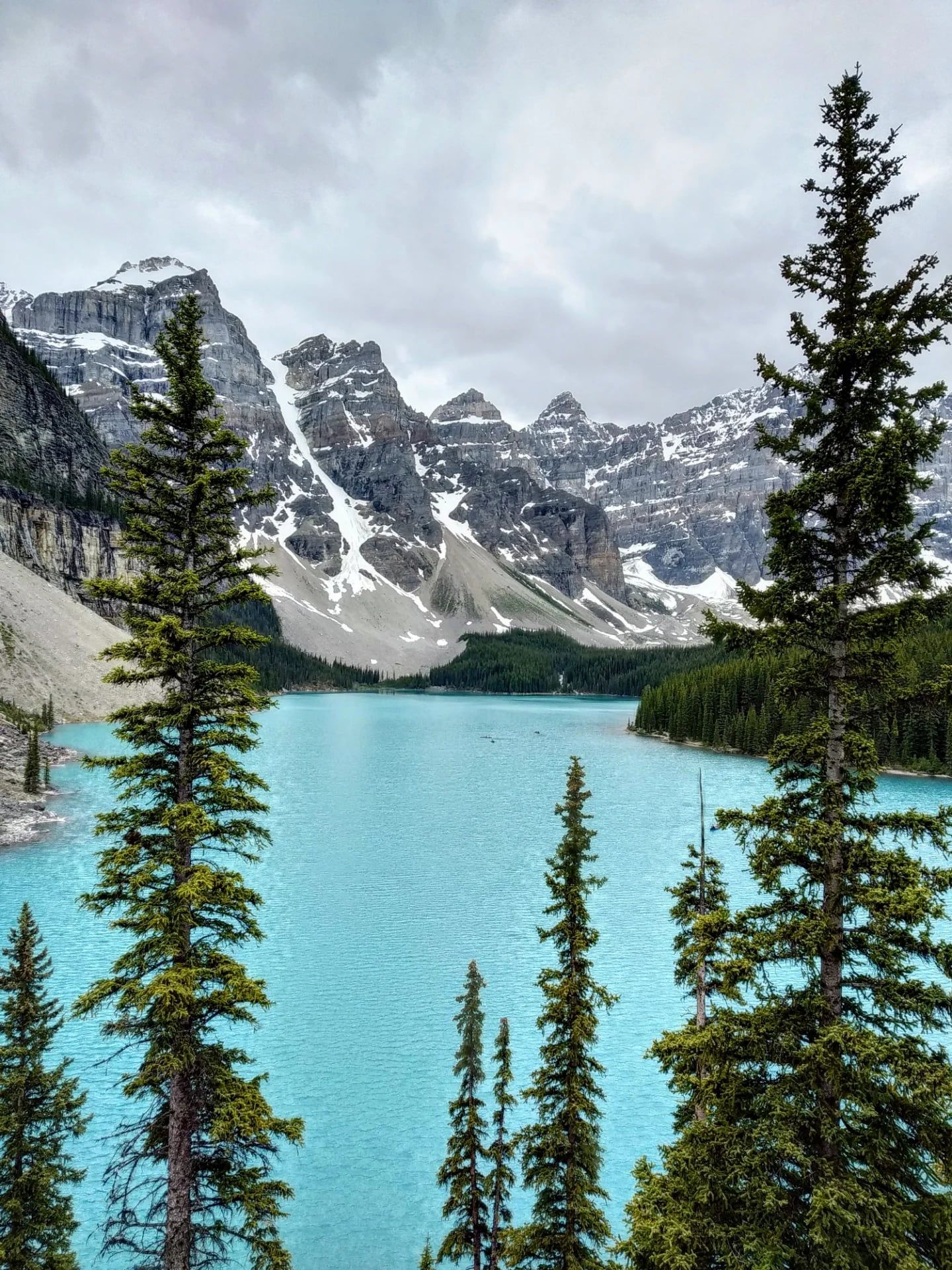
A massive natural dam of fallen rock borders the northern edge of Moraine Lake. This barrier formed when a large section of the Tower of Babel collapsed, creating the 24-meter-high mound known today as the Rockpile. The lake itself reaches a maximum depth of 14 meters and covers exactly 50 hectares. Fay Glacier and Larch Creek provide the primary inflows, depositing fine particles of rock flour into the basin. These suspended particles absorb all colors of the light spectrum except blue and green, reflecting a distinct turquoise shade back to the surface. The color peaks in intensity during late July when glacial melt reaches its highest volume.
The Valley of the Ten Peaks surrounds the water with steep walls of sedimentary rock. Limestone, shale, and dolomite formations dominate the landscape, pushed upward by tectonic forces millions of years ago. Mount Babel stands prominently near the lake's edge, while the Wenkchemna Glacier clings to the higher elevations. The elevation of 1,884 meters keeps the environment cold. Water temperatures hover between 3-4°C, posing an immediate risk of cold shock to anyone who falls in. A person submerged in these waters loses muscle control within minutes. The Moraine Creek acts as the primary outflow, carrying the frigid water down the valley to join the Bow River. The flow rate fluctuates wildly depending on the seasonal melt, peaking in late June and slowing to a trickle by October. The sedimentary rock walls surrounding the basin constantly shed material. Small rockfalls echo through the valley daily, adding fresh debris to the scree slopes at the base of the Ten Peaks.
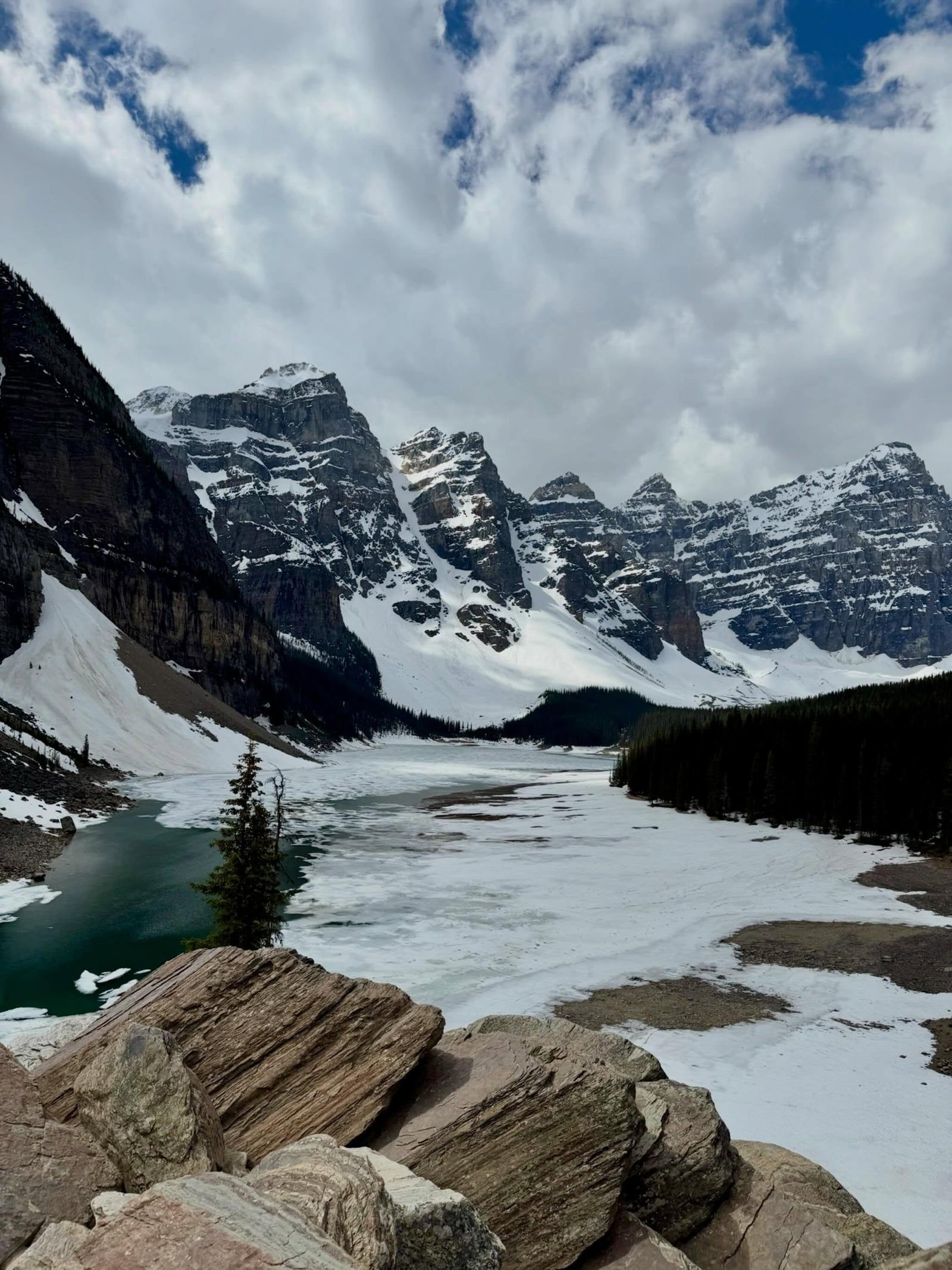
Dense alpine forests of spruce, fir, and larch trees blanket the lower slopes. The larch trees shed their needles annually, turning a bright golden color in mid-September. The terrain remains rugged and uneven across the entire valley. The Rockpile Trail consists of steep, rocky stairs that become slippery when wet. Hikers navigating the path to Sentinel Pass face a grueling 720-meter elevation gain over switchbacks of loose scree and sharp boulders. Snow and ice cover the landscape from November through May, triggering frequent avalanches across the access road and surrounding slopes. The sheer volume of snowfall buries the lake under several feet of ice, completely obscuring the famous turquoise water. The avalanche paths cross the main road in multiple locations, leaving deep debris fields of snapped trees and compacted snow. Parks Canada clears these paths with heavy machinery every spring, repairing the asphalt before the first shuttles arrive in June.
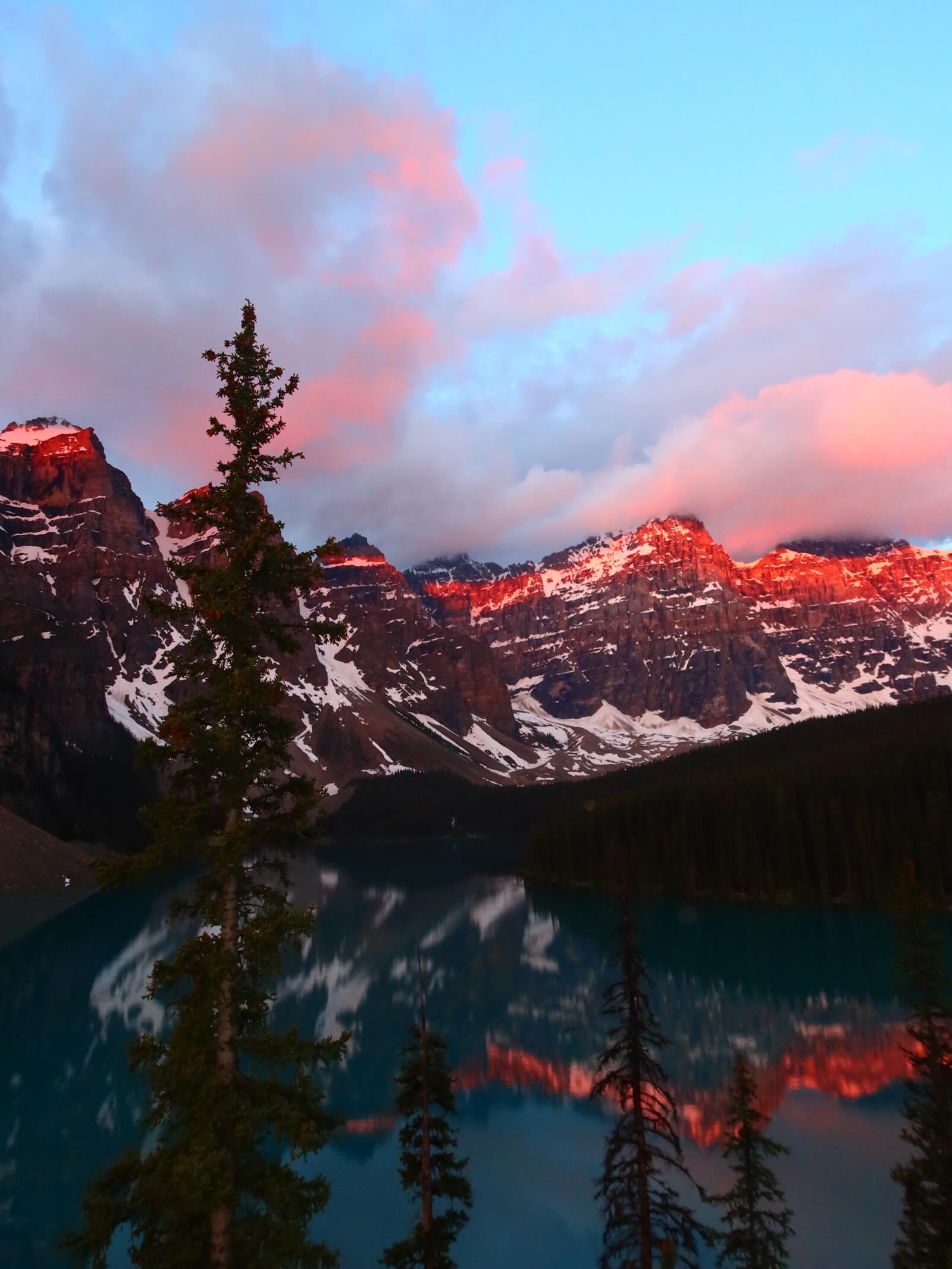
The Stoney Nakoda First Nations view the Valley of the Ten Peaks as a sacred site of healing. Indigenous communities have maintained a spiritual connection to this landscape for thousands of years, utilizing the high-altitude terrain for traditional practices. The towering peaks and isolated waters provide a physical space for reflection and cultural continuity. Elders pass down oral histories detailing the geological formations and the migration patterns of the local wildlife. The valley represents a living classroom where traditional ecological knowledge intersects with daily survival in the harsh alpine environment.
Mainstream Canadian culture adopted the lake's image as a symbol of national identity in the mid-20th century. The view from the top of the Rockpile Trail appeared on the reverse side of the Canadian twenty-dollar bill in 1969. This steel engraving, part of the "Scenes of Canada" series, circulated widely and earned the vantage point its permanent nickname: the "Twenty Dollar View." The Bank of Canada featured the lake again in a later currency edition, cementing its status as an iconic Canadian landmark. Millions of citizens who never visited Alberta recognized the jagged peaks of Mount Hungabee and Mount Babel from their daily financial transactions.
Today, the site represents the tension between natural preservation and mass tourism. The complete ban on personal vehicles and private watercraft reflects a cultural shift toward aggressive conservation. Parks Canada prioritizes ecological integrity over unrestricted human access, enforcing strict rules to protect the water from invasive parasites and the wildlife from human interference. The visual impact of the lake extends into modern digital culture. The turquoise water and jagged peaks form a highly photographed location, driving millions of social media interactions annually. This digital fame fuels the extreme demand for shuttle tickets, forcing the park to implement the rolling 48-hour reservation window. The lake exists simultaneously as a sacred Indigenous site, a historical symbol of Canadian currency, and a heavily regulated modern tourist commodity. You cannot simply drive up to the water's edge; you must earn your time at the lake through careful planning and strict compliance with federal regulations.
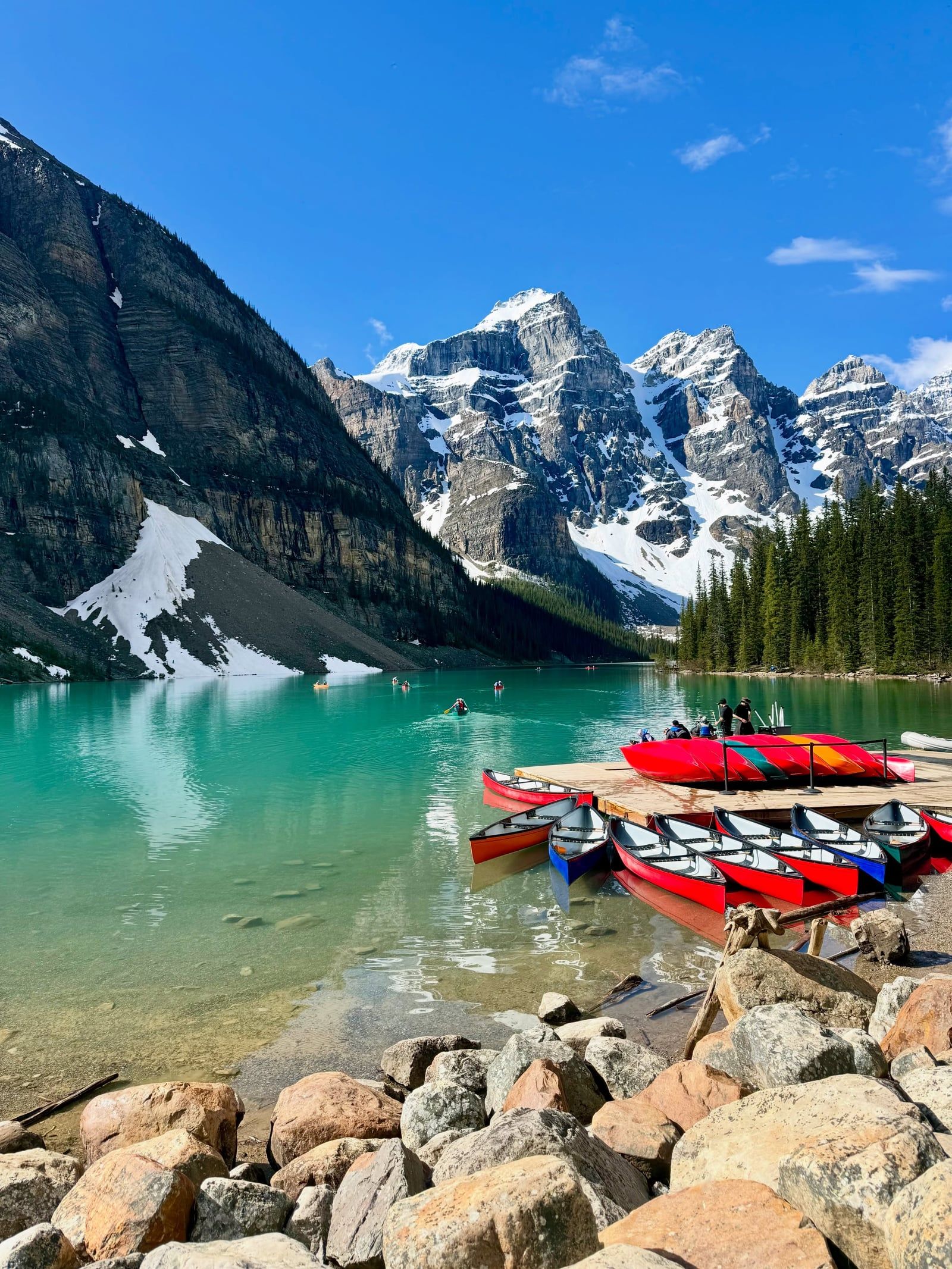
The Rockpile is not a glacial moraine; it formed from a massive rockfall off the Tower of Babel.
The view from the Rockpile Trail was featured on the Canadian $20 bill in 1969.
The lake has zero cell service, Wi-Fi, or municipal electricity.
Private canoes and paddleboards are banned to prevent the spread of Whirling Disease.
Visitors must carry bear spray and maintain a 100-meter distance from grizzly bears.
The access road crosses active avalanche paths and closes entirely from October to June.
Larch trees in the surrounding valley turn bright gold for just a few weeks in September.
Walter Wilcox named the lake in 1899 after standing on a large pile of rocks. He mistakenly believed the rocks were a glacial moraine left behind by retreating ice. Geologists later proved the rocks fell from the adjacent Tower of Babel.
Glaciers grind against the mountains, creating a fine powder called rock flour. Meltwater carries this flour into the lake, where it remains suspended in the water. The particles absorb all light except blue and green, reflecting a turquoise color.
No. Parks Canada banned personal vehicles on Moraine Lake Road in 2023. You must book a shuttle, take public transit, or hire a commercial tour operator to reach the lake.
The water temperature stays between 3-4°C (37-39°F) year-round. Falling into the lake causes immediate cold shock and rapid hypothermia. Swimming is strictly discouraged.
Private watercraft are banned as of 2026 to prevent the spread of Whirling Disease. You can only access the water by renting one of the red canoes provided by the Moraine Lake Lodge.
The "Twenty Dollar View" refers to the vantage point from the top of the Rockpile Trail. The Bank of Canada featured this exact perspective of the lake and the Ten Peaks on the reverse side of the $20 bill in 1969.
The access road closes to all vehicle traffic from mid-October to late May due to severe avalanche risks. Only experienced backcountry skiers and snowshoers with avalanche training can access the area during these months.
Dogs can hike the trails on a leash, but they are not allowed on most public shuttles or inside the rental canoes. You must arrange private transportation if you plan to bring a pet.
The lake sits at an elevation of 1,884 meters (6,181 feet) above sea level. Visitors rushing up the steep Rockpile Trail often experience shortness of breath and mild headaches due to the thinner air.
Recreational drones are strictly prohibited by federal law in all Canadian national parks. Flying a drone at the lake carries a fine of up to $25,000 CAD.
Browse verified tours with free cancellation and instant confirmation.
Find Tours